Why I Carried a Leica M11 450km Across Northern Spain
A field report on shooting a Leica M11 and Voigtlander 35mm f3.5 across the Camino San Salvador and Camino Primitivo, and why an analogue rangefinder belongs on a long thru-hike.
I like slowing down. That's most of why I hike, and it's most of why I shoot Leica.
A long thru-hike and a rangefinder ask the same thing of you: stop, look, decide, then act. Neither one rewards rushing. Somewhere around my third or fourth camino I noticed that the days I carried a camera were the days I actually saw the villages I walked through, instead of just logging kilometers and phone notifications. Photography, like a long-distance hike, is one of the few things left that forces me away from a screen and into paying attention to what's actually in front of me.
So when I set out to walk the Camino San Salvador into the Camino Primitivo this year, a mountainous, roughly 450km push from León to Santiago de Compostela, there was never a real question about what camera was coming. It was the Leica M11 and a single manual lens, the Voigtlander 35mm f3.5. No second body, no zoom, no pile of chargers. One rangefinder, one focal length, and however many days it took to walk there.
Why a rangefinder earns its weight on a long trail
This M11 and the Leicas before it have been to the Sahara, to Antarctica, to the mountains of Nepal, and none of them have ever let me down. Leica builds these things to be tools, not showpieces. Mine are used hard and look it, and every one has kept working.
The build quality is the first thing you notice and the last thing you stop noticing, because it just becomes normal. The color rendering out of the M11's sensor has a warmth and a roll-off in the highlights I haven't gotten from any other digital camera I've owned, and after a decade of shooting Leica I still can't fully explain why. It looks like a photograph instead of a file.
The rangefinder itself is the real reason I bring it. Focusing through a rangefinder patch forces you to commit to a frame before you press the shutter. There's no autofocus hunting, no fifteen-shot burst to sort through later. You see the shot, you focus manually, you frame it, and you take one photo. That discipline is exactly what I want on a camino. I'm not there to spray and pray. I'm there to notice one thing worth noticing and take one photo of it.
There's a practical side too. The M11 charges over USB-C and moves images over wifi, so I didn't need a laptop or a separate charger with its own brick and cable. On a trip where I'm counting grams (I have, genuinely, cut the handle off my toothbrush to save weight), one less charger is real. The body itself is heavier than most mirrorless cameras in its class, so I'm not saving weight overall by choosing a Leica. I'm just choosing where the weight goes.
The Voigtlander 35mm f3.5: not a Summilux, and I didn't want one
I didn't want a bulky lens hanging off the body for 450km, so I left my Summilux 35mm at home and packed the Voigtlander instead. It's tiny. It practically disappears against the M11's body, which mattered more to me on this trip than resolution charts.
It's not as sharp as the Summilux. It has a bit of retro character wide open, softer corners, and it doesn't perform well once the light drops. The manual focus ring is large and easy to find by feel, but it doesn't rack focus fast. You learn quickly that this lens rewards zone focusing: pick a distance, shoot it like street photography, and let the lens do what it's good at instead of fighting it.
That's a tradeoff, not a complaint. The Voigtlander costs around $600. My other 35mm lenses run $8,000 to $10,000. Judged against glass fifteen times its price, of course the corners are soft. Judged as a compact, honest, manual 35mm with real character, it did exactly what I asked of it for two weeks of walking.
Carrying it through the rain
I carried something like $10,000 of camera and lens through mountain passes where I got caught in downpours more than once, sweat through my shirt daily, and slept most nights in shared albergue bunks. That's not a sane place to bring precision optics. I did it anyway, because I think cameras are meant to be workhorses, not museum pieces, and Leica builds them to survive exactly this kind of use.
To give it a fighting chance, I kept the whole kit in an Artisan & Artist ACAM-76 soft pouch. It held up to being dropped into a pack next to a stove and a water filter, and it shrugged off every bit of rain and trail dust I put it through. My only real complaint: it doesn't ship with its own strap, so carrying it hand to hand at rest stops meant either holding it or shoving it back in the pack. A simple wrist strap would close the one gap in an otherwise excellent piece of kit.
Ten photos from the Camino San Salvador and Camino Primitivo
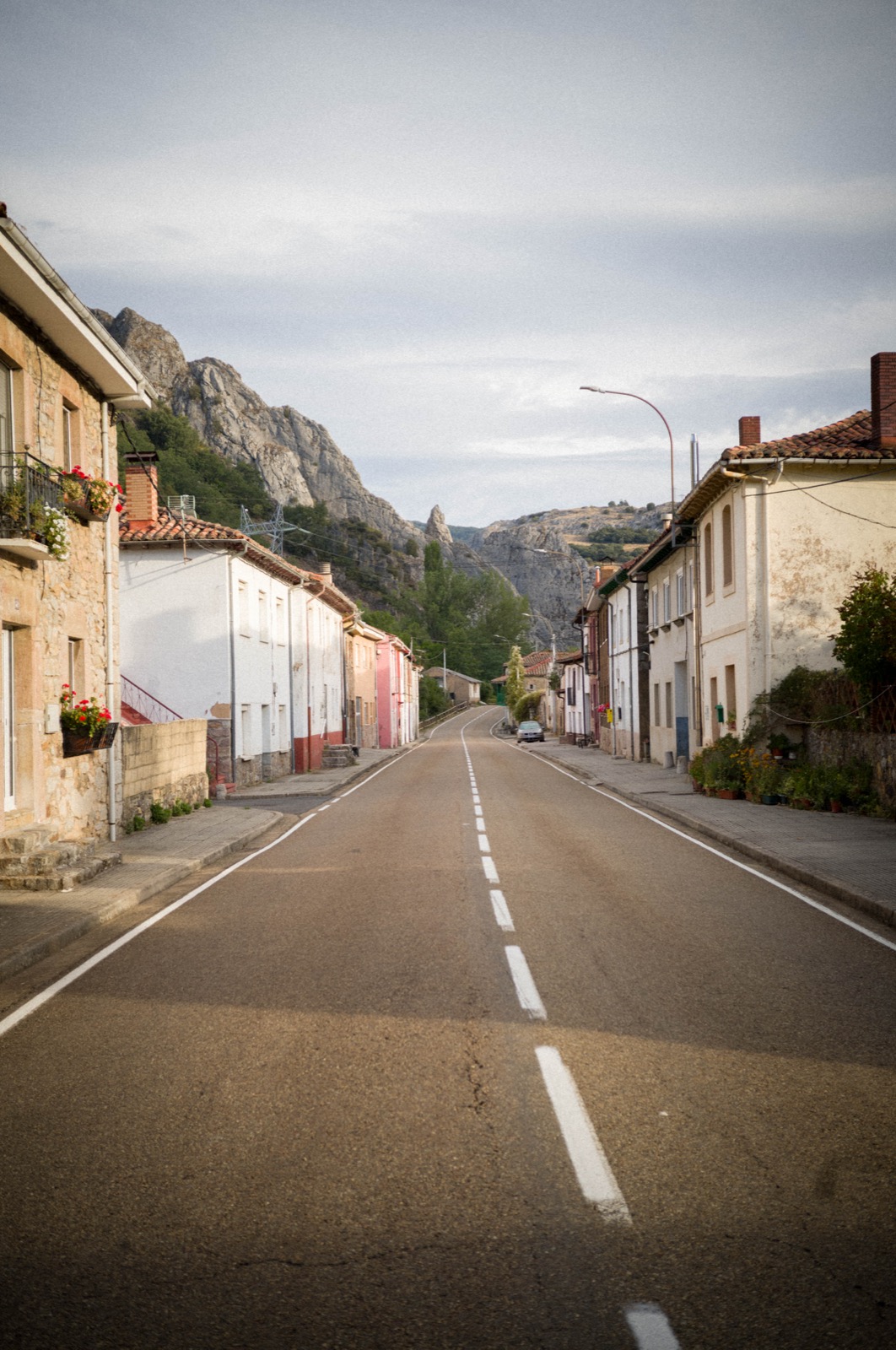 Day 2 on the Camino San Salvador, around 8am, two hours into the climb into the mountains. Last village I'd see before six hours of nothing but trail until the town where I slept that night.
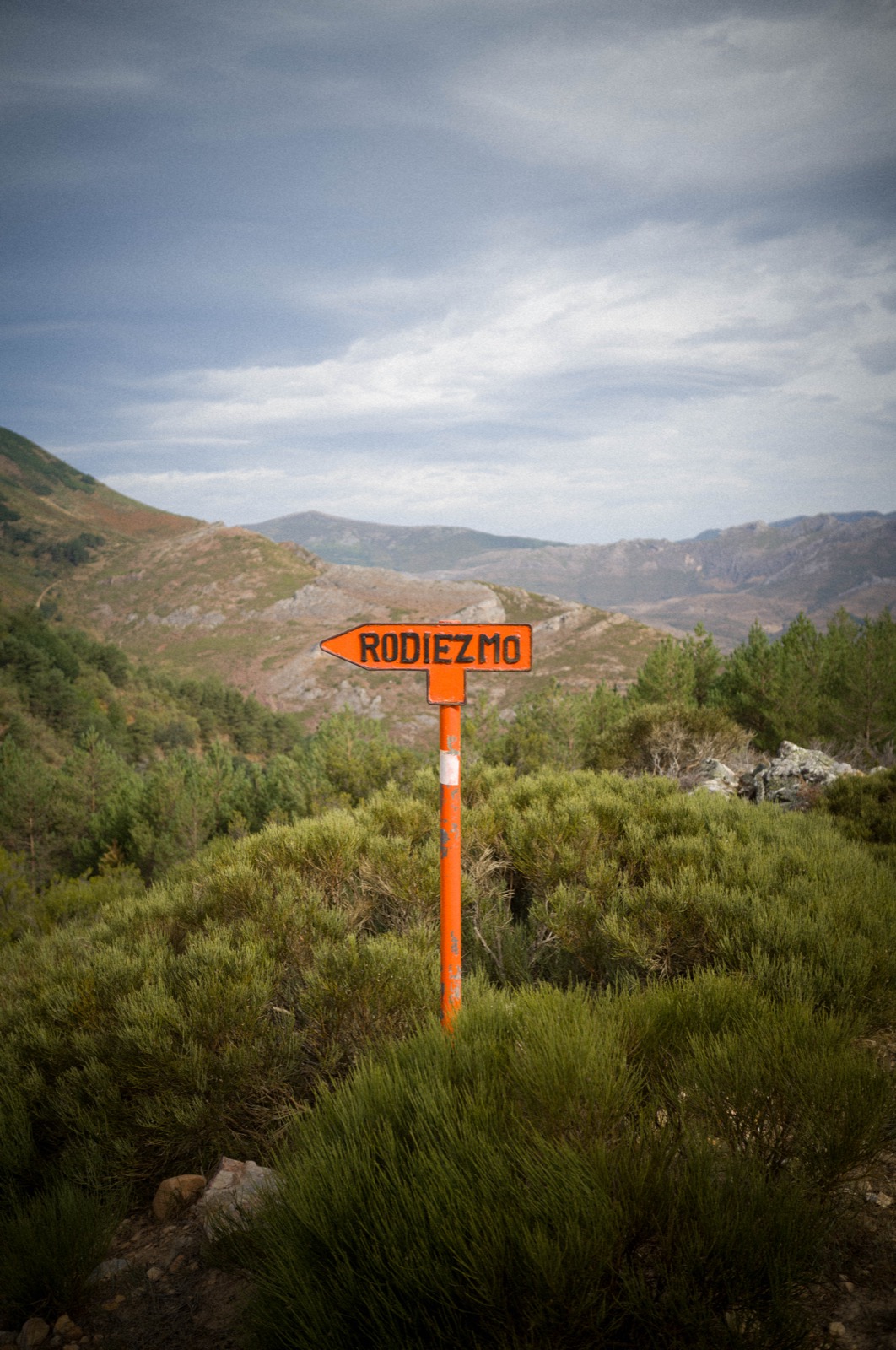 The first of the big high-pass climbs on the San Salvador.
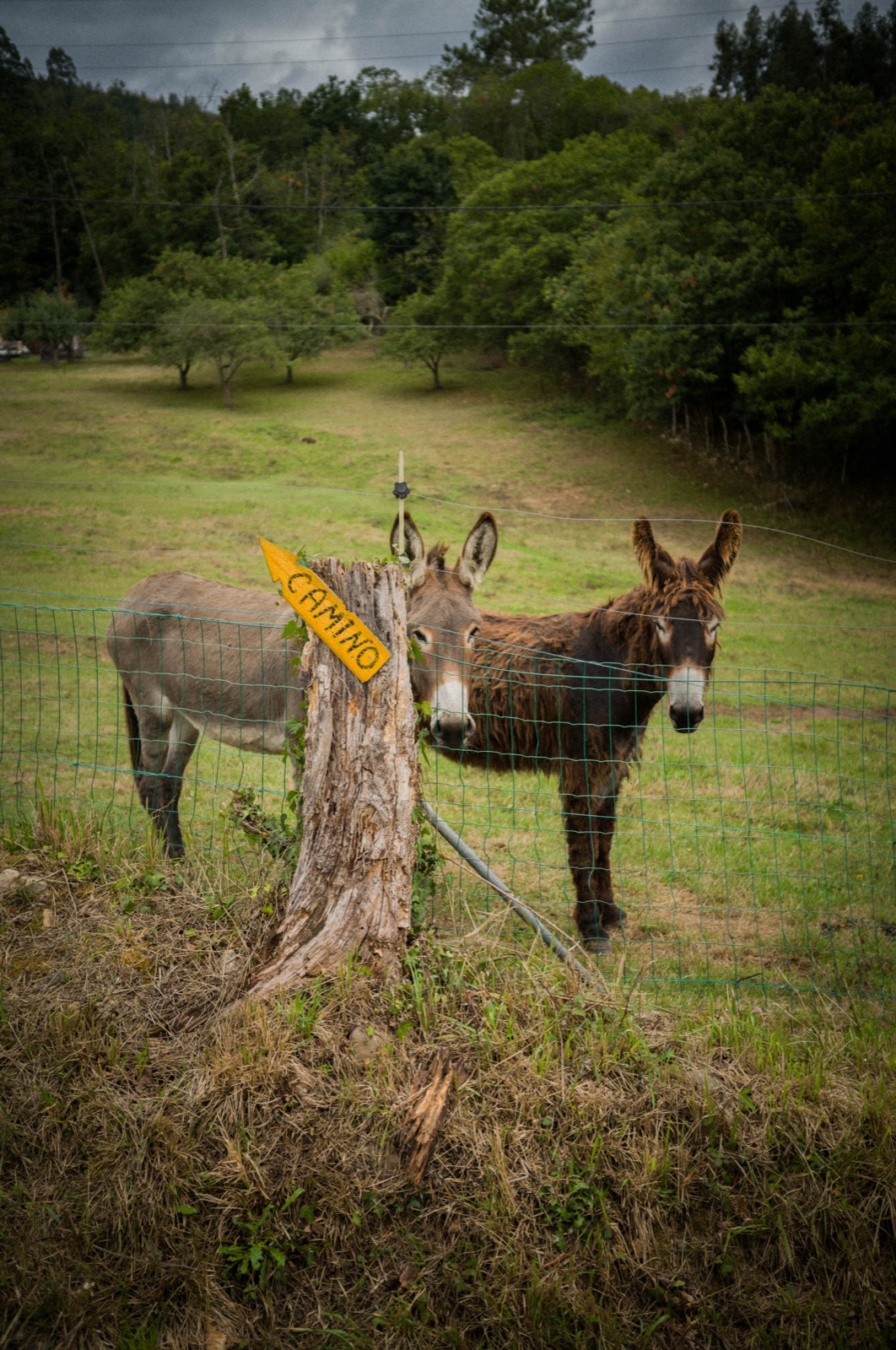 Day 1 of the Camino Primitivo, about three hours out of Oviedo.
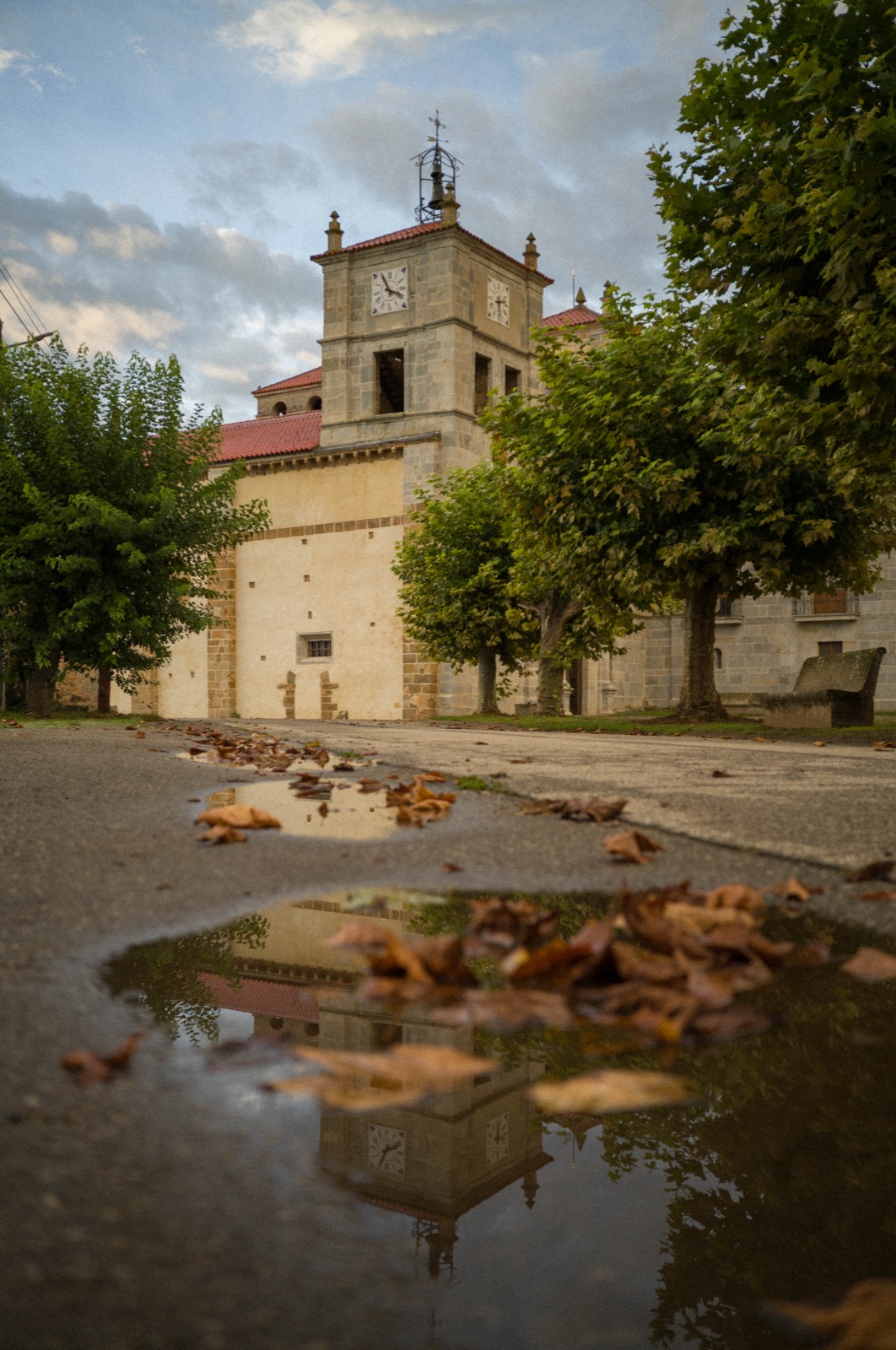 7am on day 2 of the Primitivo. I'd just passed through a small village and grabbed a quick coffee before walking by a thousand-year-old monastery, the ground still dark from overnight rain.
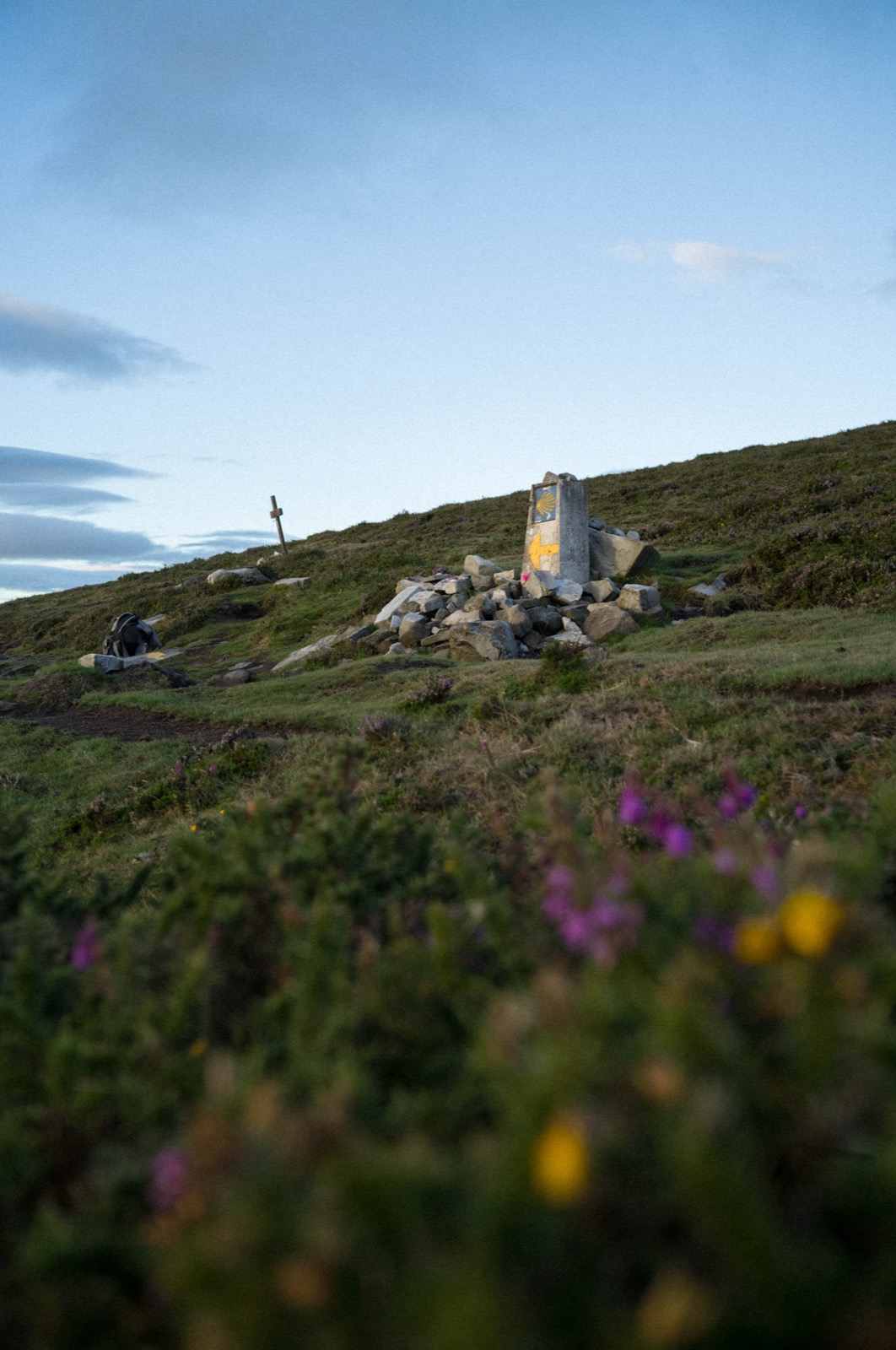 Day 4 of the Primitivo, summiting the highest point on any camino route, just after sunrise. The wind was blustering, and the light was at my back as I headed west.
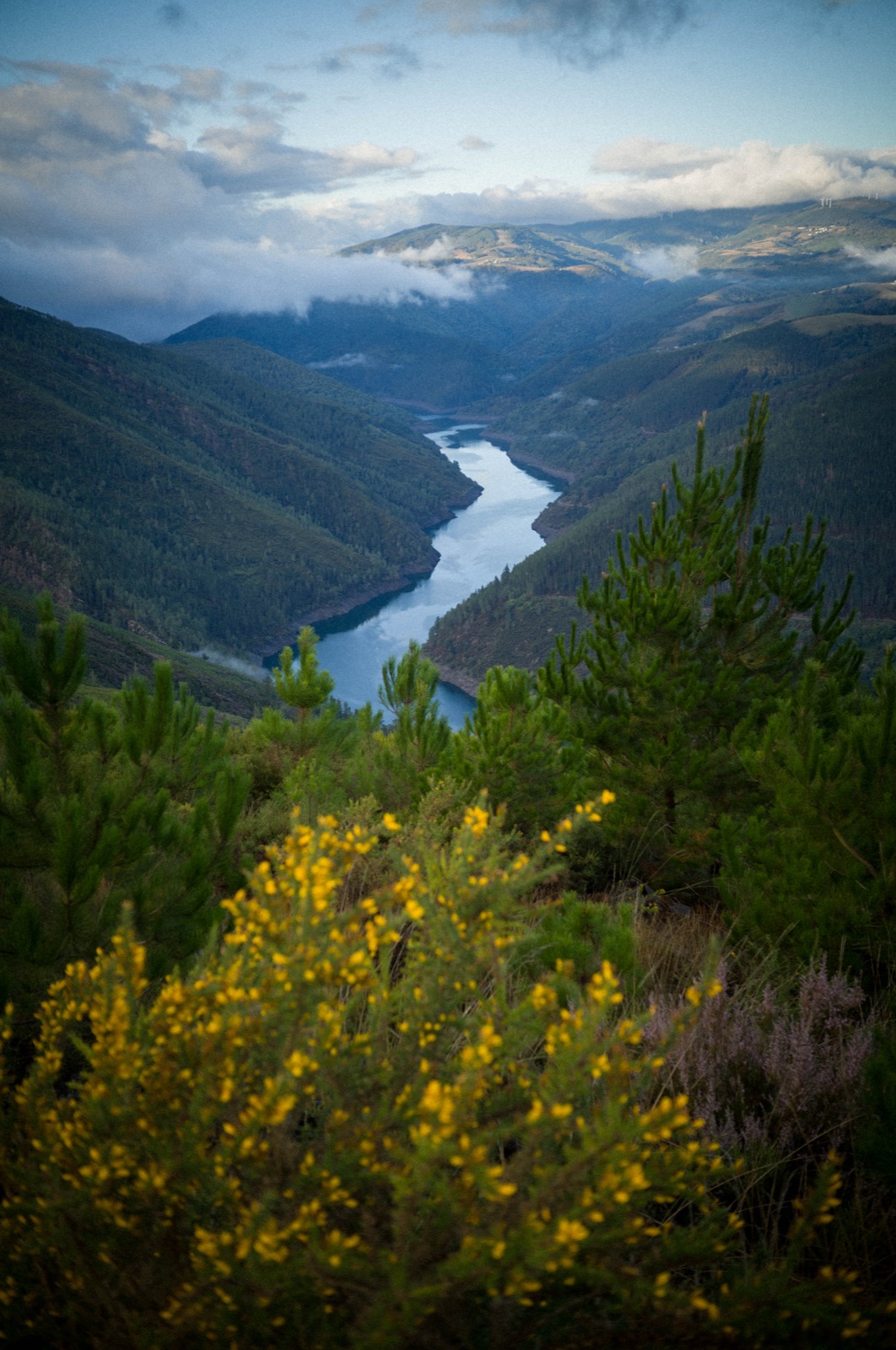 Day 5 on the Primitivo, heading down the steep descent toward the dam below. Endless views were the whole stage. Right before the descent started, everything was fogged in, then cleared just in time.
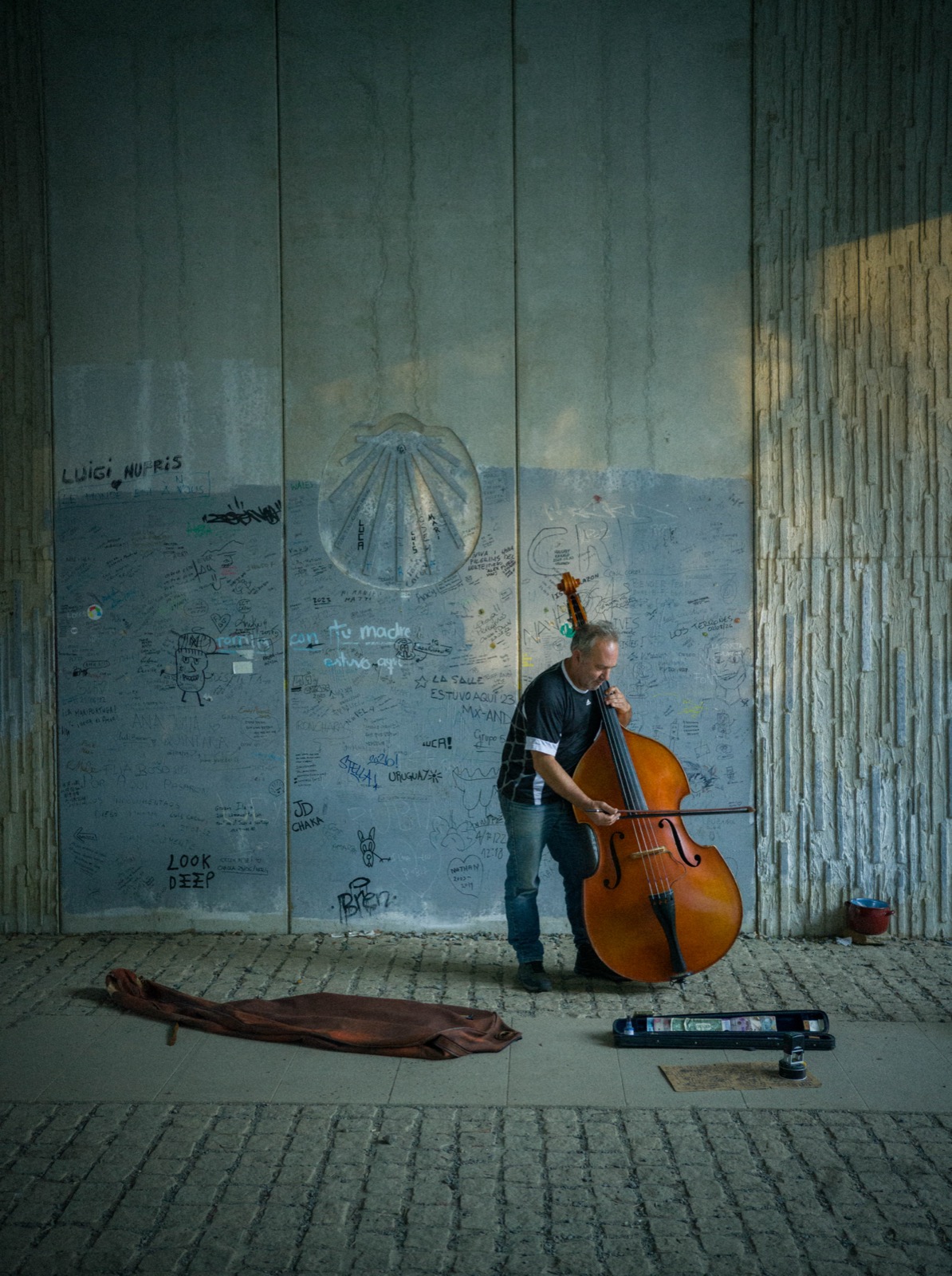 Day 9 of the Primitivo, about 12km from Santiago, the last tunnel of the hike. I love camino tunnels: colorful graffiti, scrawled words of wisdom, and every so often an amazing musician. This one had a cellist, and the sound echoed through the morning stillness. My favorite photo of the trip.
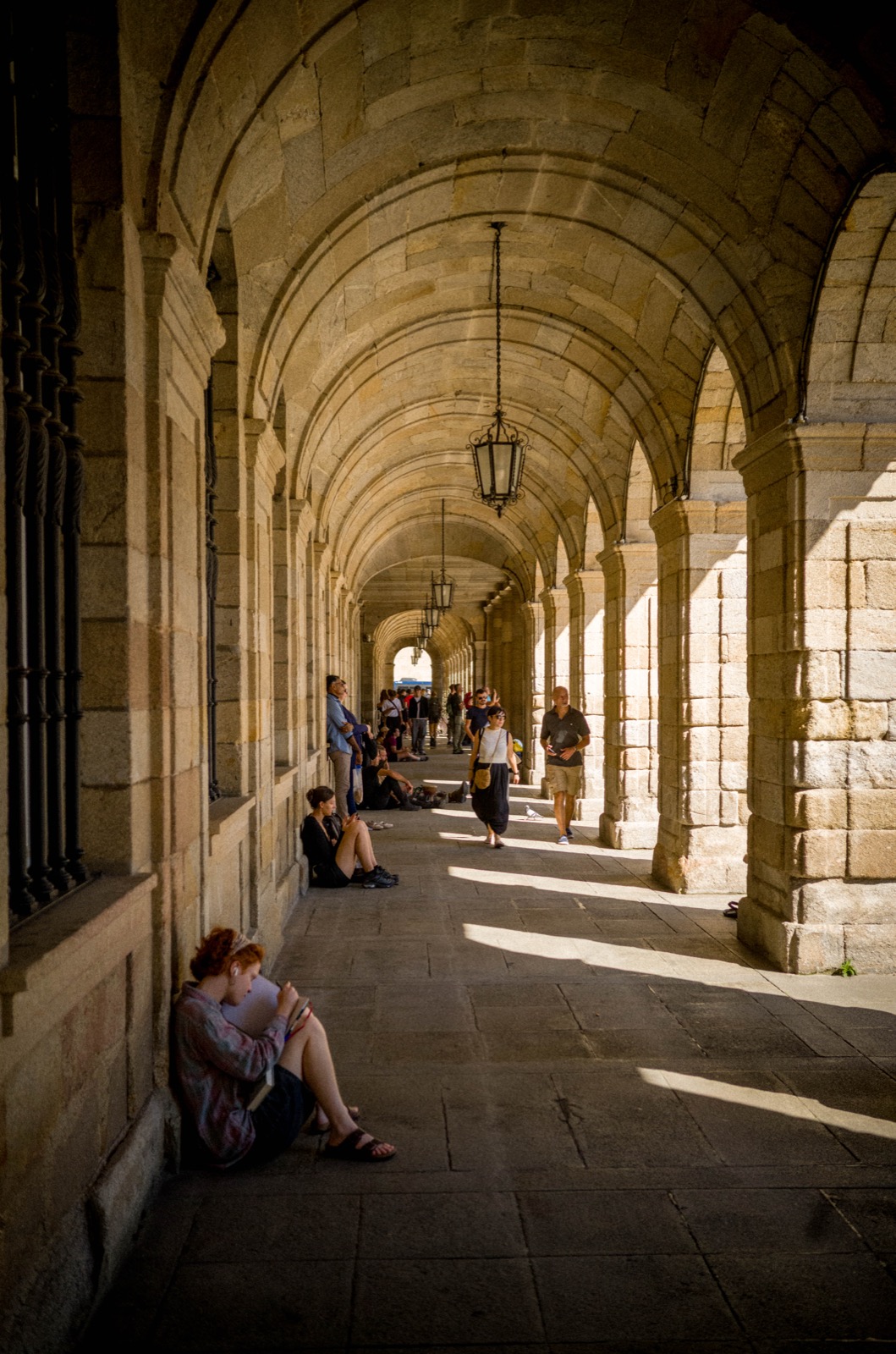 Sitting across from the cathedral in the plaza. At the end of every camino I sit for a few hours and just watch people process the end of their walk, each in their own way.
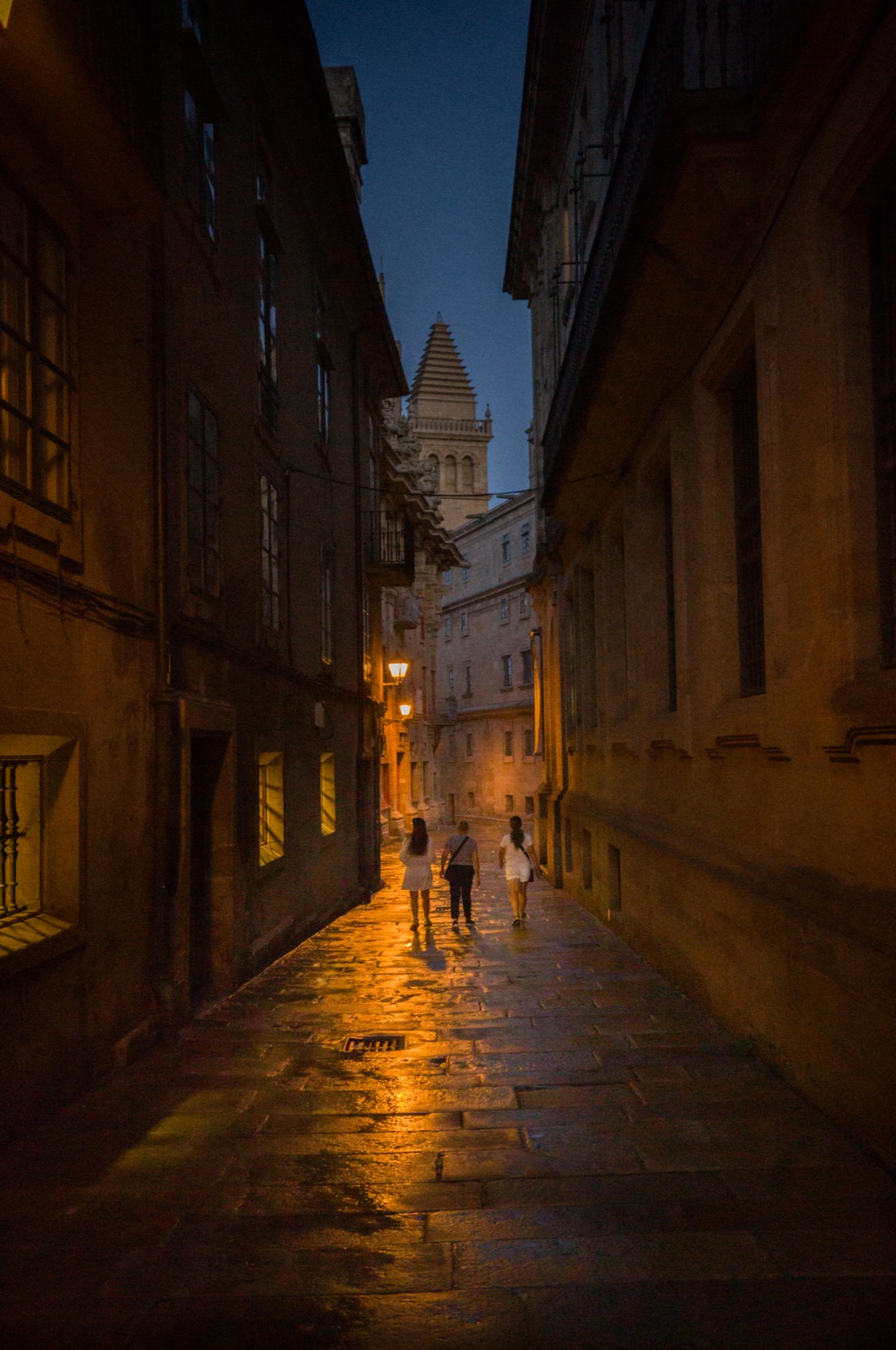 I had an extra day in Santiago. I'm an early riser, so I wandered the historic streets at dawn. Always a photographer's dream.
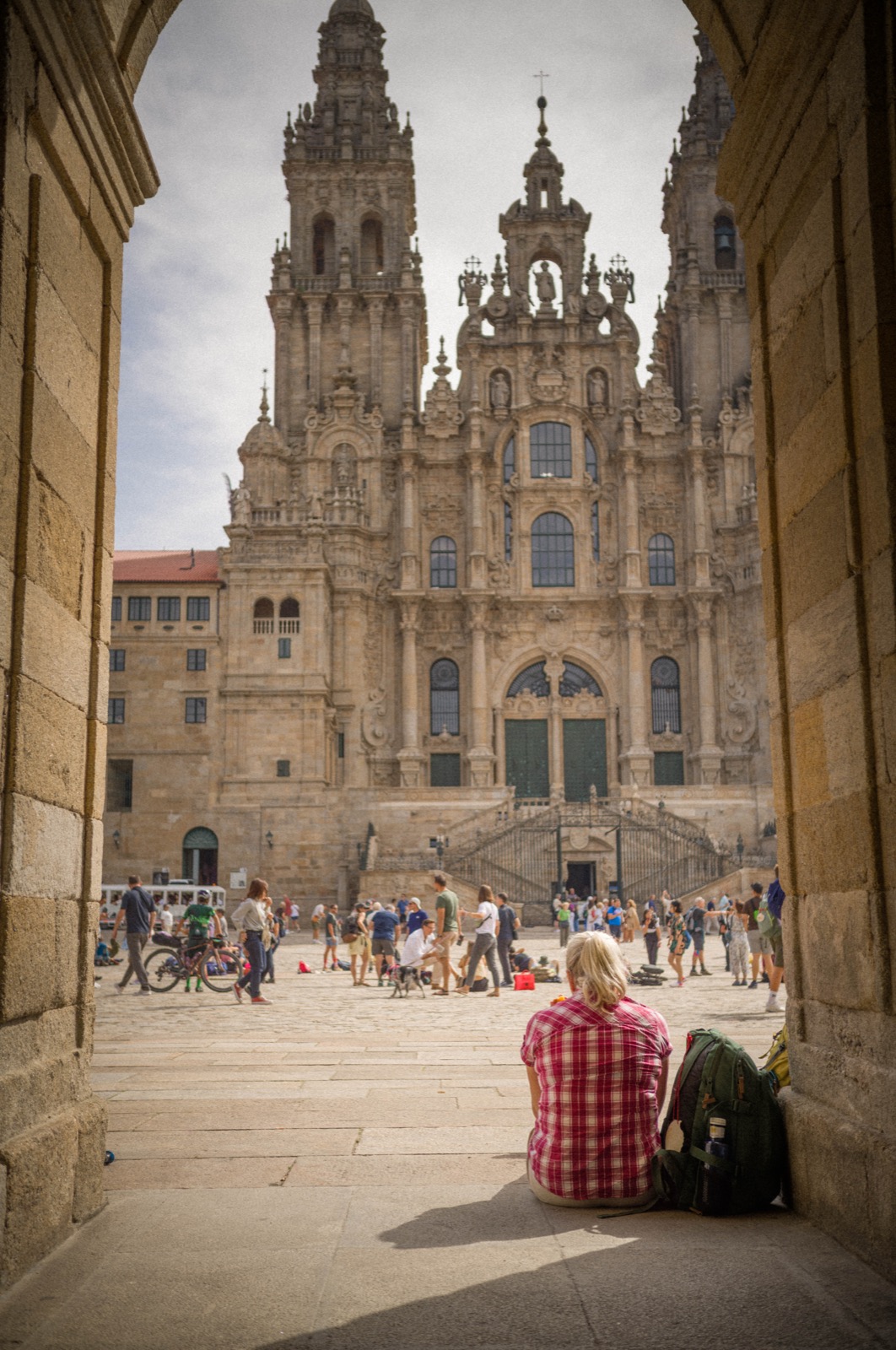 A classic cathedral shot: a pilgrim taking it all in.
Closing thought
I'll keep bringing a rangefinder to places it has no business being, because the alternative is a phone in my pocket and a trail I walk without really looking at it. If you're planning your own route through this part of Spain, I built mycaminoguide.com for exactly that kind of trip planning. And if you want more of these, hit subscribe.
Subscribe
New posts on AI, developer relations, photography, and the odd long walk, straight to your inbox. No spam.